At Thorndown Primary School, we are passionate about the children developing a love of history, an understanding of different cultures and a curiosity of how our world has been shaped over time. Our history curriculum brings the past to life and helps children make sense of the world around them. Through an engaging and ambitious history curriculum, we aim to spark children’s curiosity about the people, events and ideas that have shaped Britain and the wider world. We want our children to develop a passion for finding out what happened in different time periods, why it happened and how the past continues to influence our lives today. We strive to inspire children to become curious, confident and independent thinkers. Through history, pupils are encouraged to question, investigate and look beyond the obvious, developing the skills to carefully analyse evidence and make sense of the world around them. They learn to see events through different eyes, appreciate a range of perspectives and understand that the past is often complex and open to interpretation. Above all, we want our children to develop the confidence to ask challenging questions, think for themselves and form thoughtful, well-informed judgements.
Throughout our history curriculum, children are encouraged to become thoughtful and inquisitive historians. As we are based in such a history-rich local area, the children have many opportunities to visit historical sites and museums across Cambridgeshire (such as the Norris Museum in St Ives and the Cromwell Museum in Huntingdon). We also enhance the children’s history learning with visitors from a range of historical backgrounds and different in-school experiences.
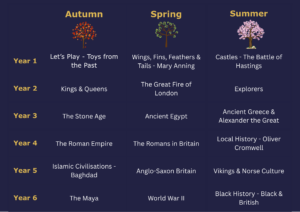
In EYFS, children begin their exciting journey into history through ‘Understanding the World’. They develop a fascination with the past by exploring how they, their families and communities have changed over time. Through topics that captivate the children’s attention (such as dinosaurs, volcanoes and artists), children ask questions, make connections and develop a curiosity about our world. In Key Stage One, children journey from the familiar to the distant past, exploring events within living memory, such as the toys and childhood experiences of their grandparents, before stepping further back in time to discover fascinating worlds beyond living memory, including castles, significant historical figures and pioneering explorers. As the children move into Key Stage Two, the children build on these skills through a range of historical units that are delivered chronologically to help them understand how different periods of time have impacted one another as well as modern day life.
Ultimately, we want our children to leave us with more than a knowledge of History. We want them to leave with a sense of wonder about the past, a desire to keep asking questions and the confidence to think deeply about the world around them.